Start here
What is the haka? Where to see it
What the haka is, why it is not only a war dance, where to watch one in Rotorua, and what the 30-minute Whakarewarewa performance includes.
Book the performance ↗Quick answer
The haka is a group of Māori dances performed with chanted or shouted words. People perform haka to welcome guests, honour the dead and their ancestors, and mark occasions, so it is not only a war dance. In Rotorua you can watch one at Whakarewarewa, the village where Tūhourangi Ngāti Wāhiao families live among the geothermal pools. The ticket on this site covers a daytime performance of about 30 minutes, without the village tour or a meal.
The short answer
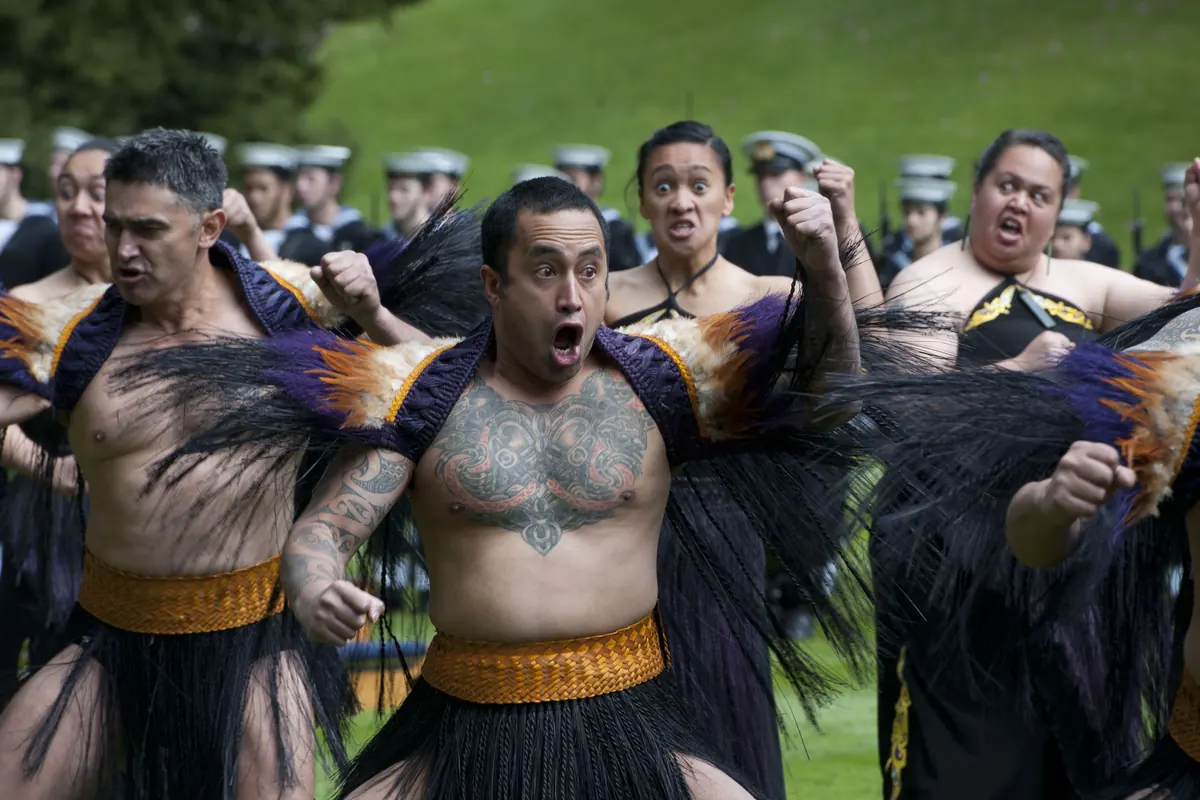
Yes, you can see a haka in Rotorua, and the clearest choice for a short visit is the daytime performance at Whakarewarewa – The Living Māori Village. Expect songs, poi, stick games and haka, with the meaning of each explained, in about 30 minutes. A haka is a Māori dance performed by a group, with chanted or shouted words, and Te Ara, the New Zealand government's encyclopedia, says plainly that it is not only a war dance. This guide explains what the word covers, what a haka looks like and what the ticket on this site does and does not include.
What the word means
In te reo Māori, kapa means to stand in a row or rank, and haka is a dance. Te Ara defines kapa haka as a group or groups standing in rows to perform traditional Māori dances, accompanied by sung or chanted words, and calls it a living art form. Wikipedia describes haka as vigorous movement and foot-stamping with rhythmically shouted words, performed by men and women in many settings across Polynesia. So when you meet the phrase kapa haka, it names the whole performing art, which has songs and poi in it as well as haka. The village's own site uses the plainer words song, dance and haka when it describes its daily cultural performance to visitors.
Not only a war dance
Te Ara states that, contrary to popular belief, haka is not only a war dance. There are many kinds, each suited to an occasion. Tīmoti Kāretu, an expert in haka and in the Māori language, describes haka as a way to welcome guests, open a new meeting house, pay respects to the dead, honour ancestors and teach traditions to the next generation. Wikipedia names the peruperu as the war haka, performed with weapons, and the haka taparahi as the more common ceremonial kind, performed without them. Haka that welcome visitors are how many travellers first meet one, which is why a performance for visitors often includes a haka of welcome as well as the items described below.
What you will see and hear
A haka uses the whole body. Te Ara quotes the Ngāti Porou haka master Henare Teowai, who said the whole body should speak. Performers stamp, slap their bodies and call out together. Pūkana, the widening of the eyes, and whētero, the extended tongue, belong to the art, and Te Ara says performers in wartime used them to intimidate opponents. Waiata, the songs, and poi, the swung balls, are separate items from haka. The village lists haka, poi and tī rākau, the stick games, among the items of its daily performance.
- Haka: shouted words, stamping and slapping, performed in rows
- Waiata: songs sung to tunes or chants
- Poi: balls on cords, swung in time with the music
- Tī rākau: stick games
Ka Mate, the haka you may know
The haka most people have seen is Ka Mate, which the All Blacks perform before test matches. Te Ara, in a page on Ngāti Toa, says the chief Te Rauparaha composed it on an occasion when he narrowly escaped death at the hands of his enemies, and that it is read as a celebration of the triumph of life over death. Wikipedia places the composition around 1820 and says he hid in a kūmara storage pit. As part of a wider settlement, the New Zealand government agreed to record Ka Mate's authorship and significance to Ngāti Toa. Which haka you see at Whakarewarewa is for the performers to choose.
The haka in sport
Wikipedia says the first recorded public performances of a group haka outside New Zealand were made in 1884 by the New Zealand rugby union team in Sydney, and that sport has made the haka familiar around the world. The All Blacks have performed Ka Mate for many years, and since 2005 they have sometimes performed another haka, Kapa o Pango. A haka on a rugby field is one use of the form. It is not the whole of it, and it differs from a performance by a village's own people that includes songs and explains them.
How kapa haka came to visitors
Te Ara records that Christian missionaries in the early 19th century tried to stop haka and other traditional chants. The first local haka concert groups appeared in the 1880s, performing for tourists, and they often set Māori words to English tunes. In 1910–11 the Te Arawa guide Mākereti Papakura led a group of performers to Australia and the United Kingdom. Te Ara adds that tourism has played a role in keeping Māori culture and language alive, especially around Rotorua, and it records Māori leaders arguing that Māori should run their own tourism.
Where to see a haka in Rotorua
Te Ara says Māori cultural tourism was still centred on Rotorua at the end of the 20th century, and several venues there offer performances. Whakarewarewa is the one this site covers, and what sets it apart is that it is a home. The village's own site calls it the legacy and home of the Tūhourangi Ngāti Wāhiao people, owned and operated by local residents. Te Ara says Tūhourangi and Ngāti Wāhiao people displaced from the Tarawera area after the 1886 eruption settled there. Its daily cultural performance includes haka, poi and tī rākau.
What this ticket is
The ticket on this site is for the cultural performance only. You check in at reception and a host shows you in. The performance lasts about 30 minutes, it is held in the daytime and it is wheelchair accessible. The village tour and the other activities are not included and are sold separately. The village limits the numbers at each performance, so pick a date early if you travel in a busy week. It is a short daytime performance, not an evening hāngī dinner, and it is worth planning the rest of your day around that.
How to watch well
Treat it as a performance given by people in the place where they live. Listen to the host, follow any instructions about photographs, and keep to the marked walkways around the geothermal ground, as the village asks every visitor. Watch the haka rather than copying it: Wikipedia notes that Māori scholars regard inaccurate performance of haka by non-Māori as mistaken. If you are unsure whether something is welcome, such as filming a particular item, ask a host before you do it.
Who this isn't for
This is not the right ticket if you want an evening with a hāngī dinner, a long show or a tour of the village. It is 30 minutes of performance by day. It also suits poorly anyone who wants a staged spectacle in a theatre, because the performance is held in a performance area within the village itself. If you want the village on foot, book the guided tour as well and read the next guide, which compares the two tickets.
Frequently asked questions
Is the haka a war dance?
Not only. Te Ara says haka suits many occasions: welcoming guests, honouring ancestors, paying respects to the dead and teaching traditions. Some haka, such as the peruperu, were war dances.
How long is the performance?
About 30 minutes. The guided village tour and the village's other activities are separate tickets.
Will I see Ka Mate?
That is for the performers to decide, and the items can change. Ka Mate is the haka best known abroad, but there are many others.
Is it a dinner show?
No. It is a daytime performance with no meal. The ticket covers the performance and a host to show you in.
Do only men perform haka?
No. Women and men have both performed haka traditionally, according to Wikipedia, and newer haka have been composed for women and for children.
What does kapa haka mean?
Kapa means to stand in a row, and haka is a dance, so kapa haka is a group performing in rows. It names the whole performing art, including songs and poi.
Sources